Your Guide to Oahu Wedding Venues
Photos by LT² Photography
The venue decides more than where you’ll stand. It decides the light on your faces, the color of the sky behind your vows, how far your guests walk or travel, and what happens if the clouds roll in.
On Oahu, those differences are dramatic. A hotel terrace above Waikiki, a garden beneath sheer green mountains, and a gathering on the North Shore can all sit within an hour of one another but feel like three different worlds.
Years from now, your memories of your venue will be colored by your photos. So this guide is organized the way a photographer thinks: by light, by backdrop and by side of the island, with a closer look at venues LT² Photography has photographed and the questions that save couples from surprises.
What's Inside This Guide
📸 What Makes a Venue Photograph Beautifully
The direction of light matters more than the view
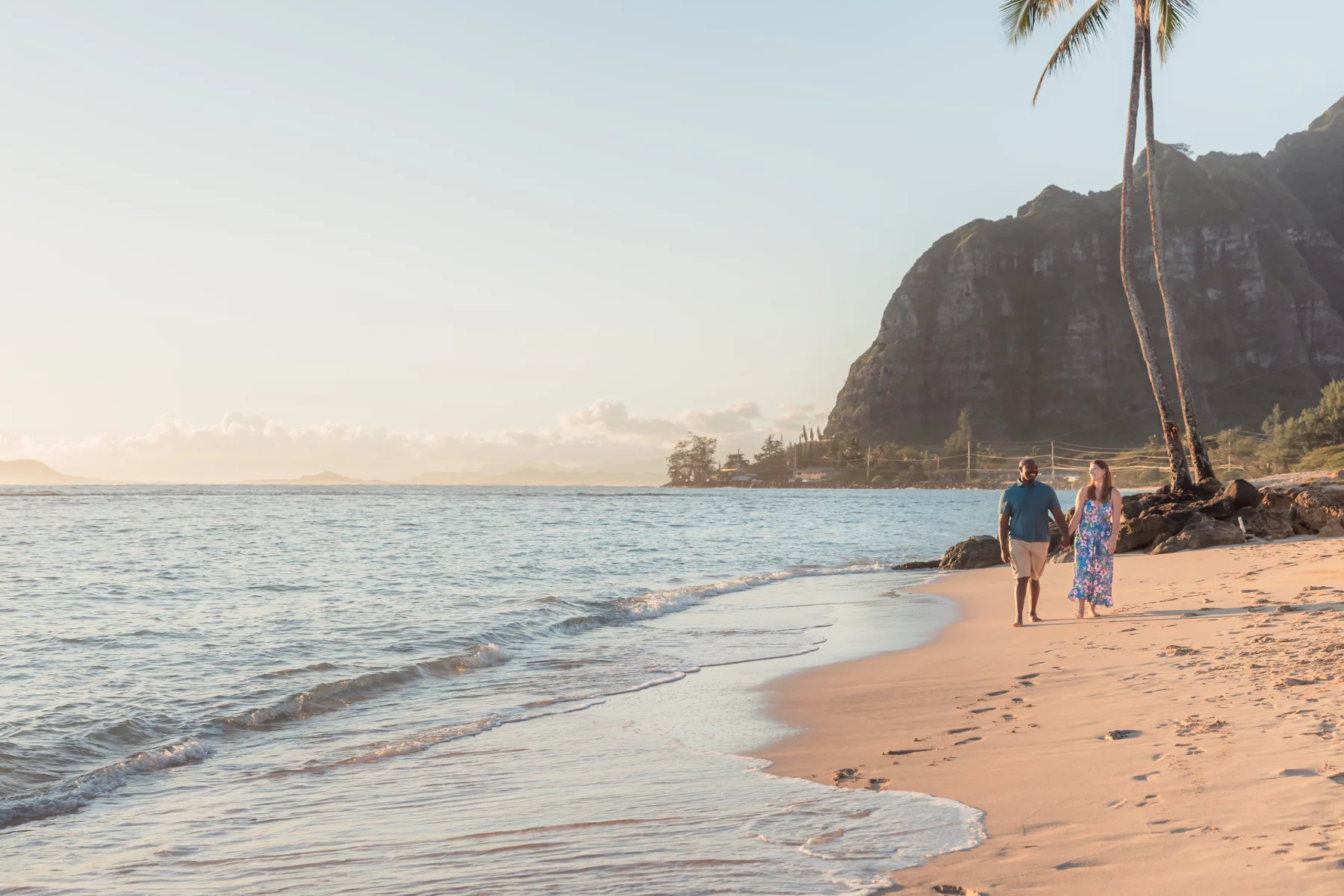
Venue owners will hate me for saying this, but the direction of light during your ceremony matters more than the view. Where a venue faces decides where the sun sits during your ceremony and portraits. On the west side, around Four Seasons at Ko Olina, the sun sets over the water, which gives warm, glowing light behind the two of you. On the windward side, the sun rises over the ocean and sets behind the Koʻolau mountains, so evenings soften early and mornings are bright and clear.
Venues on the North Shore, nestled between the mountains and the ocean, offer soft light through most of the day.
Couples planning Hawaii destination weddings tend to have one of two venue visions: gotta have sand beneath your feet and a sunset over the ocean, or must be fully immersed in tropical greenery. Hate to be the bearer of bad news, but both of these can work against you if you don’t find a skilled wedding photographer. The question to ask your photographer is not, “Have you photographed a wedding at my venue before?” It’s: “How would you plan coverage of our ceremony and portraits around the light at my venue?”
A sunset ceremony on the sand puts the sun directly behind you, and without the right positioning, your faces fall into shadow while the sky looks perfect. Under a canopy of tropical greenery, light filters through in uneven patches, and all that green reflects onto skin. A skilled photographer will know which way to face you to avoid the challenges, when to schedule your vows, and where to take you for newlywed portraits with beautiful, even light.
Before you book, ask which way the ceremony site faces. If you’re able to come to Hawaii for venue tours before booking, it’s worth scheduling them around the same time you want to have your ceremony, and planning your timeline around it.
Backdrops that give you variety
The settings that photograph best on Oahu fall into a few types: open ocean with a clean horizon, lush mountains and valleys, and manicured gardens. A venue that offers two or more of these gives you a range of portrait opportunities without ever leaving the property.
Privacy changes the pace
A private venue lets you take your time. A public beach at midday on a summer weekend comes with other people in the frame, which means more planning around crowds and less freedom in where you stand.
📍 Start With the Side of the Island
Before you fall for a single venue, decide which part of Oahu feels like you. Each region brings its own light, weather and pace.
Honolulu & Waikiki: polished, metropolitan, central and easy for guests
If you want your guests a short walk from their hotels, with restaurants and nightlife nearby, Honolulu and Waikiki make everything simpler. The south shore sits in the mountains’ rain shadow, so it tends to be sunnier and drier, and Diamond Head and the open ocean give you a skyline that reads instantly as Hawaii.
The windward side: lush, green and mountain-framed
Kailua, Kāneʻohe and Kualoa sit beneath the Koʻolau mountains, and it’s the greenest, most dramatic scenery on the island. The trade winds bring more passing showers here, which is exactly what keeps the cliffs so vivid. Choose a venue with covered space, and you’ll have the drama without the worry.
The North Shore: relaxed, open and ocean-first
Wide beaches, a slower pace and the feeling that the island exhales. North Shore venues tend to suit couples who want the day to feel like a gathering at a beach house rather than a formal event.
Ko Olina and the west side: calm water and sunsets over the ocean
On the leeward coast, Ko Olina’s protected lagoons offer calmer water than an open beach, which is a comfort when your guests include grandparents or little ones. It’s also the side of the island where the sun sinks straight into the sea.
Oahu Wedding Venues We've Photographed
Kaimana Beach Hotel, Waikiki
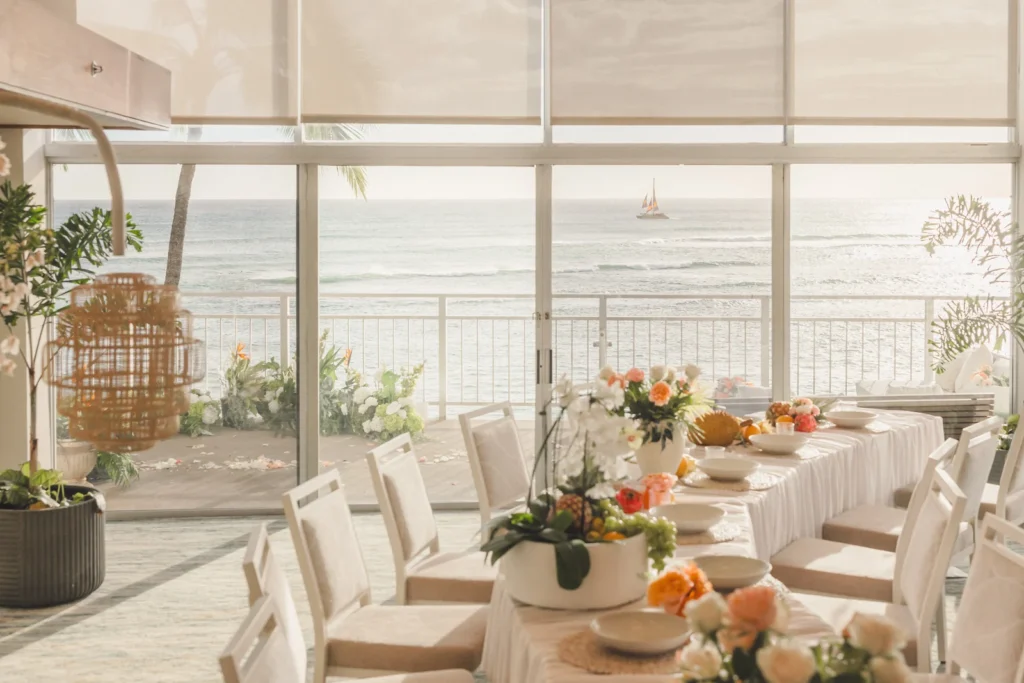
Right on the sand at the Diamond Head end of Waikiki, Kaimana pairs coastal elegance with tropical color. I designed an editorial for the hotel featuring the terrace with its palms, blue boutique palm-print walls and an outdoor ceremony on the lanai just before sunset. Each piece felt like its own setting, but it was all under one roof.
👉🏾 Check out the full editorial: Kaimana Beach Hotel wedding inspiration
Paliku Gardens at Kualoa Ranch, windward Oahu
At the base of the Kānehoalani peak, Paliku Gardens looks out toward Kāneʻohe Bay, the Koʻolau mountains and Mokoliʻi Island. With three lawns, an open-air pavilion and a permanent tent, it gives you room for a large celebration and a built-in plan for rain.
👉🏾 Read more: Kualoa Ranch weddings at Paliku Gardens
The Charming Estate, Kailua
Tucked into the Maunawili Valley on the Royal Hawaiian Golf Club property, The Charming Estate offers a circular garden-lawn ceremony with cliffs and mountain views, an indoor ceremony space for rainy days, and a ballroom for up to 200 guests just steps away.
👉🏾 Read more: The Charming Estate weddings
Questions to Ask Before You Book an Oahu Venue
Every venue on this list answers these differently, and the answers shape your whole day.
What’s the rain plan, and does using it cost extra? On the windward side especially, ask to see the covered or indoor alternative, and picture your ceremony there.
What hours does the rental include, and is there a noise curfew? Make sure getting ready, setup and teardown all fit inside the rental window, and that the music can play as long as you’d like.
What’s the all-in number? The advertised site fee is rarely the full picture. Required rental packages, catering, staffing, cleanup and Hawaii’s general excise tax can add up quickly, so ask for an itemized estimate. Resort venues often quote a food-and-beverage minimum instead of a site fee, and that minimum usually bundles tables, chairs, linens and staff, which can make the budget simpler to track.
Which vendors are required, and which are your choice? Many venues keep a preferred vendor list; most require a coordinator at a minimum, limit outside catering, or charge a fee for outside vendors. Ask before you fall in love with a vendor.
Can your photographer visit before the wedding? A walk-through lets your photographer find the best light and the quiet corners ahead of time, so nothing is guesswork once the sun starts to drop.
Where will you get ready? A dedicated suite with good window light makes a real difference in your photos, and in how calm the morning feels.
Where does the sun set? West-facing shores watch the sun sink into the ocean. On the windward side, the sun drops behind the mountains before official sunset, so the light softens earlier. Neither is better; they’re simply different looks.
How far is it from your guests’ hotels? A North Shore venue may mean an hour or more of driving for guests staying in Waikiki.
When to Start the Venue Conversation
Popular Saturdays at sought-after Oahu venues can book a year or more in advance, especially from spring through fall and over the winter holidays. If you have a specific date or venue in mind, start that conversation earlier than feels natural, and plan your wedding date around the light and the season.
Planning a Beach Ceremony Instead?
Oahu’s public beaches are beautiful, but a ceremony on the sand usually needs a State permit and comes with strict limits on chairs, arches and group size. Read what to know about Hawaii marriage licenses and beach permits before you decide.
FAQ
What are the best wedding venues on Oahu?
The best venue is the one that matches your guest count, your rain plan and the look you want. Waikiki and Honolulu suit couples who want convenience and sunshine; the windward side offers lush mountain backdrops; the North Shore feels relaxed and ocean-first.
How much does an Oahu wedding venue cost?
It varies widely. Paliku Gardens at Kualoa Ranch, for example, publishes its rental at $5,495 on weekdays and $6,495 on weekends, plus tax, before catering. Always compare the all-in cost, not just the site fee.
Do Oahu wedding venues have rain plans?
Many do. Paliku Gardens has a covered pavilion and tent, and The Charming Estate has an indoor ceremony space. Always ask before booking.
Can I get married on a public beach on Oahu?
Yes, with the right permit and within the rules on group size and setup. A private venue with ocean views gives you more freedom.
Found a setting you love? Read the full guide to planning a wedding in Hawaii, then 👉🏾 check your date with LT² Photography
Where Love Leads, We'll Follow
Safe to be yourself. Soulful in the quiet moments. Stunning in your truth.
Step into the shoes of future you on your wedding day. How do you want to feel? Seen? Celebrated? How about free to make new core memories together, with guidance from the first call to your final gallery. When you’re ready, tell us about the day you’re planning.
Our Approach
An Experience That Honors Your Love
From timeline guidance to intentional imagery, every part of the LT2 experience is designed to feel effortless, supported, and entirely you. We bring quiet luxury, emotional depth, and an eye for what matters most—so you can stay present and enjoy it all.
LT² Photography
An Experience That Feels Like Home
Hey hey—LaDonna here!
Photographer, storyteller, and quiet observer of the moments that matter most. LT2 isn’t just about taking pretty pictures. It’s about creating space where you can be fully present, fully yourself, and fully seen.
Because your wedding isn’t just a milestone. It’s legacy in motion—real, radiant, and worth preserving with care and soulful artistry.